
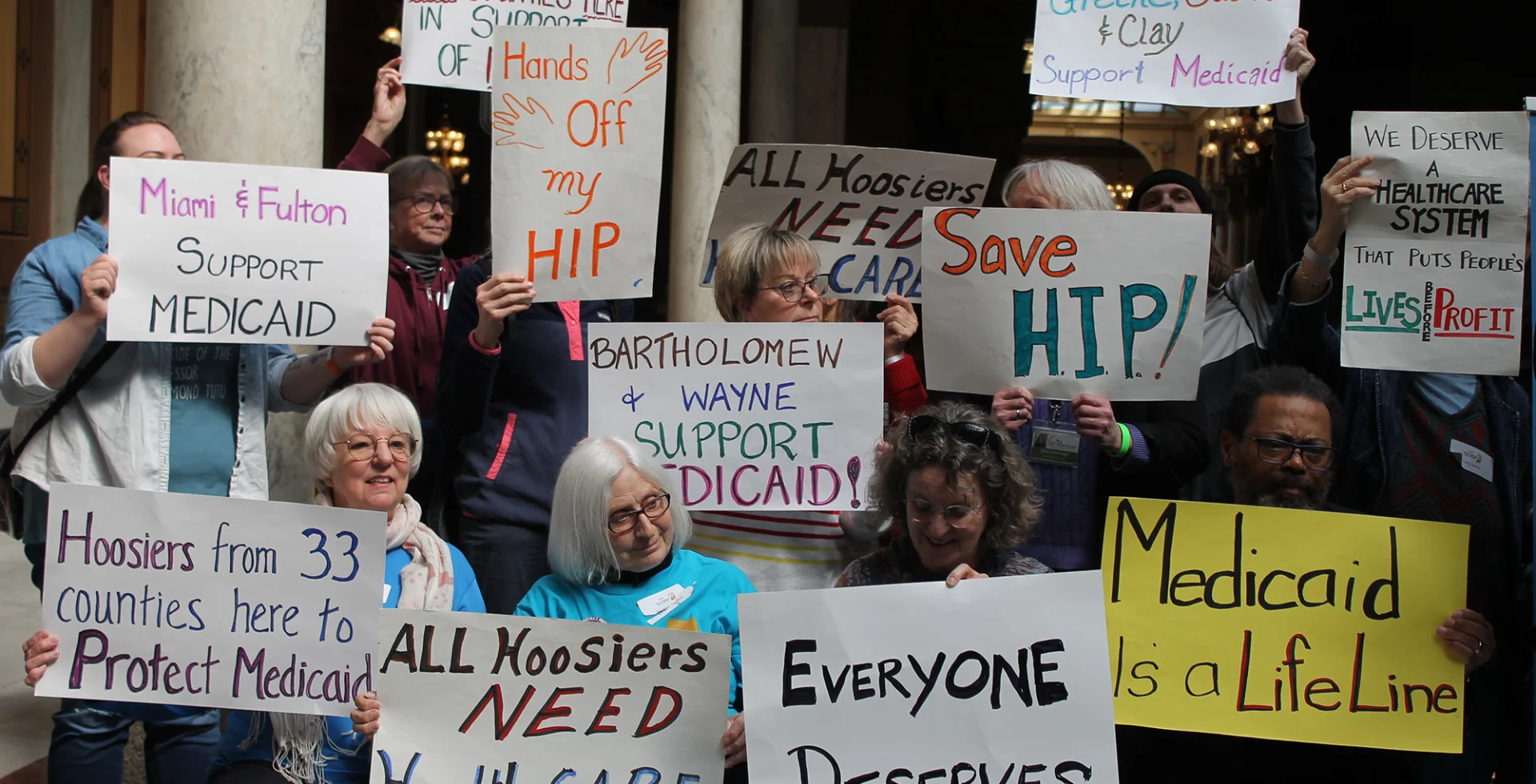
Trump Budget Suggests $15.8 Billion in HHS Cuts: What You Need To Know
The Trump administration released its fiscal year 2027 budget on April 3, proposing a $15.8 billion reduction to the Department of Health and Human Services (HHS) and requesting $1.5 trillion for defense—a 44% increase. This budget signals a significant shift in federal priorities, emphasizing national security over healthcare spending.
The proposal would also reorganize the federal health structure, eliminating several existing agencies, reducing $5 billion in what it describes as wasteful programs, and establishing a new entity: the Administration for a Healthy America.
Here 's what you should know about the 2027 budget proposal:
HHS is due to receive a $15.8 Billion Cut
1. (HHS) US Department of Health and Human Services is due to Receive a $15.8 Billion Cut. The budget allocates $111.1 billion to HHS in 2027, a 12.5% decrease from 2026. The administration says the reduction targets what it calls “bloated, woke, and inefficient programs” to refocus spending on core priorities.
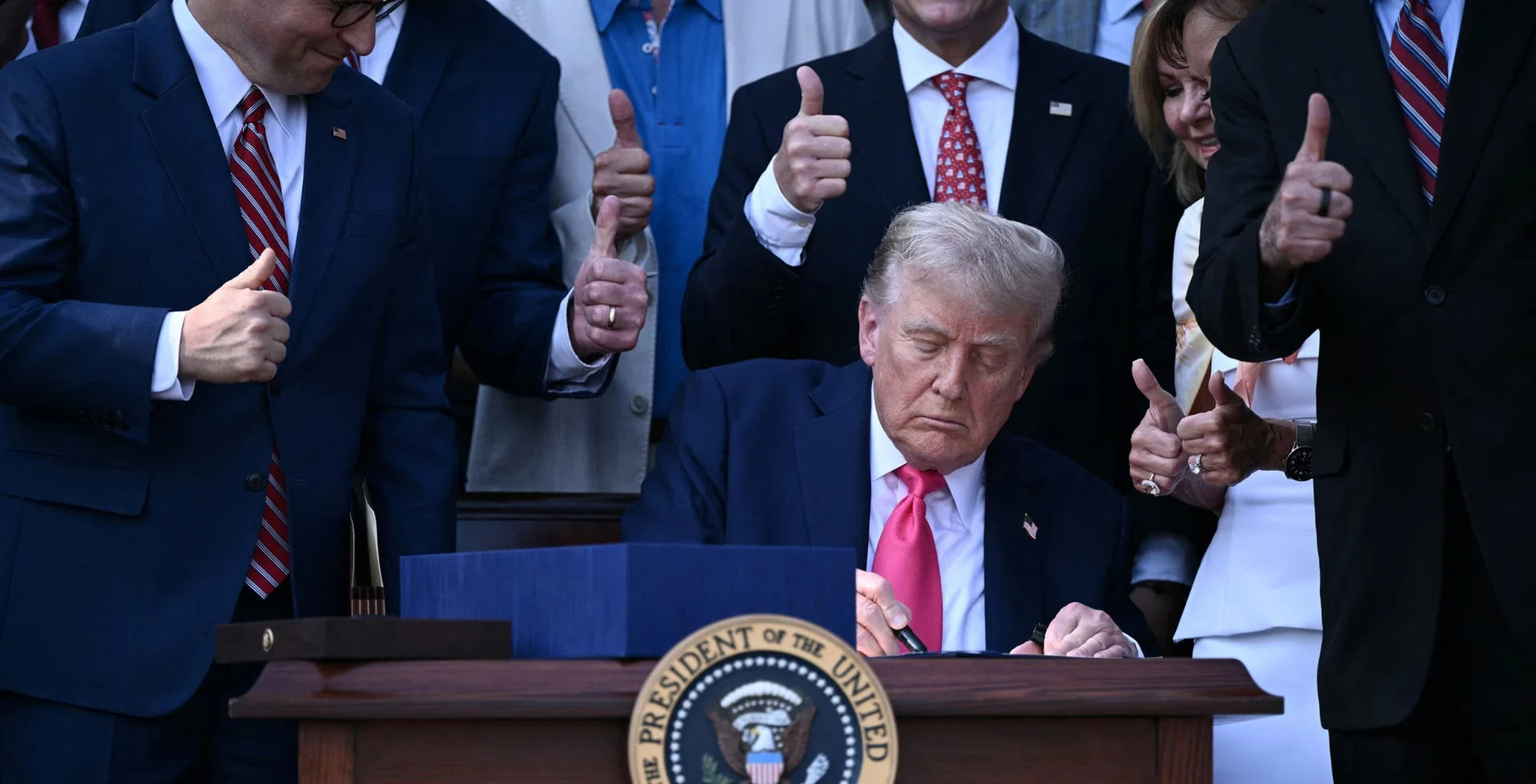
The proposal follows President Donald Trump’s One Big Beautiful Bill Act, signed nine months earlier, which enacted nearly $1 trillion in Medicaid cuts and restructured multiple healthcare programs. Key Medicaid changes include new work requirements, more frequent eligibility checks, and tighter limits on state-directed Medicaid managed care payments and oversight.
At an April 1 White House event, President Trump signaled a broader shift in federal healthcare funding, saying the federal government cannot continue to fund Medicare, Medicaid, and childcare and that these costs should fall to individual states. He added that federal resources should instead prioritize areas such as national defense, according to NBC News on April 2.
The NIH $5 Billion Cut
2. NIH Funding Reduced by $5 Billion; Three Institutes Cut. The administration claims the National Institutes of Health (NIH) engaged in wasteful spending and risky research while promoting ideologies that undermine public health. The 2027 budget requests $41 billion for NIH research, $5 billion less than 2026. It proposes eliminating– (a) the National Institute on Minority Health and Health Disparities, (b) the Fogarty International Center and, (c) the National Center for Complementary and Integrative Health.
This proposed reduction is notably less severe than the administration’s 2026 budget, which sought an $18 billion cut to NIH—a move Congress rejected. Last year, the administration also proposed consolidating many of NIH’s 27 institutes and centers, another idea lawmakers did not approve.
The National Institutes of Health (NIH) is the world’s largest public funder of biomedical research. It has supported nearly every major U.S. medical breakthrough over the past century. As of 2026, NIH researchers and grantees have received or shared 104 Nobel Prizes for groundbreaking discoveries.
Key NIH breakthroughs from 2024–2026 include:
** Brain-computer interfaces (BCI): Systems that decode neural signals, allowing some paralyzed patients to speak with up to 98% accuracy.
**Alzheimer’s blood tests: Simple blood tests that detect Alzheimer’s in older adults with about 90% accuracy, reducing the need for PET scans or spinal taps.
** Cancer mapping: 3D tumor maps that reveal microregions where cancer cells behave differently, supporting more targeted treatments.
**Gene editing for rare diseases: Personalized gene-editing therapies used to treat a baby with a rare, previously fatal genetic disorder.
**Non-opioid pain relief: New non-opioid compounds that show promise for treating chronic pain and reducing reliance on opioids.
Reorganization to HHS & Creation of a New Agency
3. New Agency: Administration for a Healthy America. The budget proposes a major HHS reorganization, creating the Administration for a Healthy America (AHA). This new agency would merge responsibilities from the Health Resources and Services Administration, Substance Abuse and Mental Health Services Administration, CDC, and Office of the Assistant Secretary for Health. The intent is to unify nutrition, food safety, chronic disease prevention, and behavioral health programs, eliminating $5 billion in deemed duplicative or misaligned initiatives. Additionally, a new $4.1 billion Behavioral Health Innovation Block Grant would replace several behavioral health funding streams, with the administration criticizing prior spending on transgender health and DEI initiatives.
$4.3 Billion + $240 Million Cut
4. Global Health Programs Cut by $4.3 Billion; PEPFAR Restructured. The budget reduces global health funding by $4.3 billion, leaving $5.1 billion. The administration frames this as moving away from “Beltway Bandit” contracts to an “America First Global Health Strategy.” Only about 40% of prior President’s Emergency Plan for AIDS Relief (PEPFAR) funds reportedly supported direct services, with the rest spent on administrative costs. Going forward, PEPFAR would operate through unified bilateral compacts to improve efficiency, and eliminates funding for certain reproductive health, circumcision, and LGBTQ-related services.
5. Hospital Preparedness Program to Be Eliminated. The administration proposes eliminating the $240 million Hospital Preparedness Program, which is currently housed within the Administration for Strategic Preparedness and Response. Officials argue that its responsibilities can be assumed by the CDC’s Public Health Emergency Preparedness Program and by state governments. Yet the program has been critical to hospital disaster planning and response, and its removal is being considered just as hospitals are still managing ongoing effects of the COVID-19 pandemic and preparing for future threats that experts have long cautioned against.
VA Health Care Funding Increased
6. Increased VA Healthcare Funding. The Department of Veterans Affairs would see a $1.5 billion (9%) increase, totaling $144.9 billion. This includes $4.2 billion for electronic health record (EHR) modernization and $130 million for artificial intelligence and automation in processing veterans’ claims. The VA’s Oracle Health EHR rollout—which could reach nearly $50 billion—continues after a temporary halt in 2023 for technical and safety reviews. The VA plans to implement the EHR at 13 medical centers this year, starting with four in Michigan, aiming for completion by 2031 (source).
AHRQ $120 Million Cut
7. Agency for Healthcare Research and Quality (AHRQ) to Close. AHRQ would face a $129 million cut, effectively ending most of its functions. The administration argues that AHRQ’s research overlaps with NIH’s work and proposes transferring some statistical duties to a new HHS Office of Strategy.
It is crucial to recognize that while the Department of Health and Human Services (HHS) is emphasizing budget reductions and consolidating grants from several major healthcare programs—often under the claim of reducing waste—this approach risks undermining proven advances in patient safety and quality.
Notably, the Agency for Healthcare Research and Quality (AHRQ), now targeted for closure, has been instrumental in driving improvements through years of research and innovation. Despite the administration’s assertion that AHRQ’s work overlaps with NIH and can be transferred, its unique impact is well documented:
**AHRQ-led initiatives have reduced Hospital-Acquired Conditions (HACs) by 21% since 2010, saving approximately 125,000 lives and $28 billion in healthcare costs.
**Demonstrated that central line-associated bloodstream infections are preventable, achieving a 72% reduction from 2010 to 2014.
**Developed the Comprehensive Unit-based Safety Program (CUSP), which has significantly lowered rates of central line and catheter-associated urinary tract infections across U.S. hospitals.
**Prioritized diagnostic safety through national summits and continued backing for “Diagnostic Safety Learning Labs,” fostering innovation and safer patient care.
These cuts not only threaten the progress made in patient safety and health system preparedness but also undermine critical programs that protect the most vulnerable populations and support U.S. engagement in global health. The evidence of AHRQ’s impact and the broad consequences of the proposed eliminations underscore the need for careful reconsideration of these budget decisions.

$4 Billion Cut
8. The Low Income Home Energy Assistance Program (LIHEAP)Proposed for Elimination Again. For the sixth time, the administration seeks to end the Low Income Home Energy Assistance Program, calling the $4 billion program unnecessary because of existing state protections against utility disconnections for low-income families.
9. WHO and Pan-American Health Organization Defunded. The budget eliminates U.S. funding for the World Health Organization, following the country’s withdrawal in late January (details), and also ends funding for the Pan-American Health Organization.
The budget characterizes these organizations as influenced by political interests, citing the WHO’s role during the COVID-19 pandemic.
The full 92-page budget proposal can be found here
Join Us
As always, Travi Health Care LLC is dedicated to keeping you informed with the latest news.
Join our community for more relevant articles and updates on important topics. Stay informed by following us on social media and share this article using the links below. Help us spread awareness and build a better world.



Leave a Reply